Masha and the Bear – agents of Russian state terrorism?
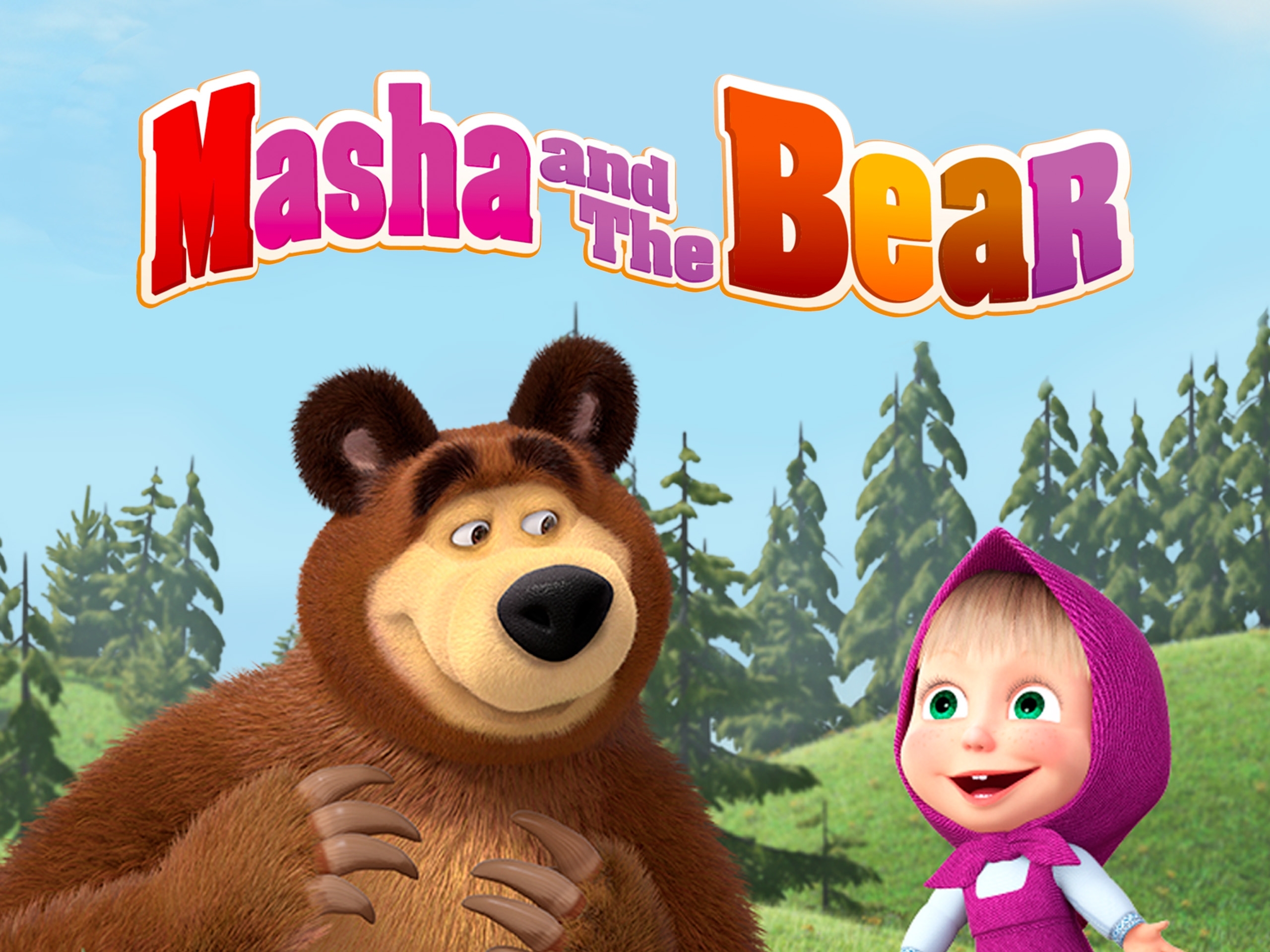
Not content with demolishing statues and monuments celebrating Alexander Pushkin, Isaac Babel and Larisa Shepitko, Ukrainian advocates of an ethnonationalist monoculture, from which all Russian influence has been eradicated, have found another target – the children’s TV series Masha and the Bear.
Produced by Animaccord Animation Studio and first broadcast in 2009, Masha and the Bear chronicles the adventures of a hyperactive four-year-old girl and her guardian, a retired circus bear. As you might gather from that description, it is aimed primarily at a preschool audience. Of Russian origin, the show became a global phenomenon. By 2021 its YouTube views had reached 100 billion, and through the 2020s Masha and the Bear has competed with SpongeBob SquarePants for the position of most in-demand children’s show worldwide. But its opponents claim to have identified more sinister aspects to this apparently innocuous kids’ cartoon.
Not for the first time. In 2017 a group from Odessa calling itself the Public Security Council published an open letter to the State Committee for Television and Radio Broadcasting and other official bodies calling for a ban on Masha and the Bear. They claimed that the show represented “the absolute embodiment of Russia’s most horrific propaganda ideas” and was responsible for “distorting the consciousness of Ukrainian children”. The cartoon was said to project a positive and heroic image of Russia, as personifed by the eponymous Bear, in an attempt to “undermine the foundations of statehood in neighbouring countries”.
The self-styled patriotic organisation proposing the ban was a dodgy pro-Maidan outfit led by one Mark Gordienko, who had made no secret of his links to organised crime. Which may partly explain why no action was taken against Masha and the Bear in response to their appeal. Also, at the time, the view in government circles appears to have been that encouraging domestic productions in the field of animation as an alternative to content originating in the Russian Federation was preferable to direct political censorship.
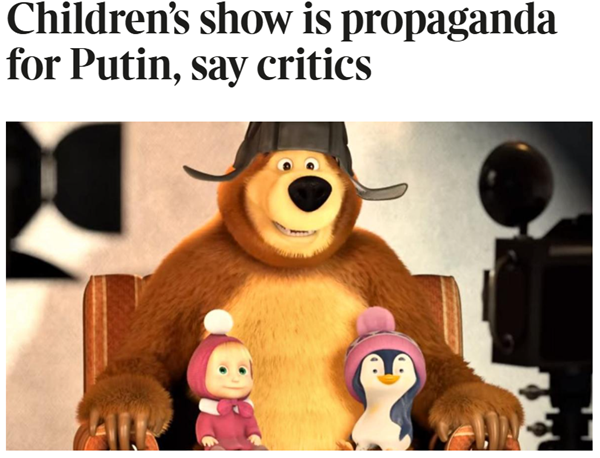
Bizarrely, the following year The Times ran a story under the headline “Children’s show is propaganda for Putin, say critics”, which took up the Odessa group’s argument that Masha and the Bear serves as an instrument of soft power for the Kremlin. It reported that objections had been raised in Estonia and Lithuania, on the grounds that the show was part of a Russian influence campaign and posed a danger to national security. An episode in which Masha wears a Soviet-era border guard’s cap (minus hammer-and-sickle), while patrolling the Bear’s garden in order to prevent a hare from eating the carrots, was seen as particularly problematic. Anthony Glees from the so-called University of Buckingham was quoted as stating that it was “not far-fetched to see her as Putinesque”.
Unsurprisingly the Times article was subject to much derision. Leonid Ragozin tweeted that it reminded him of “Russian Duma wackos claiming that Harry Potter or Teletubbies are part of a grand conspiracy to corrupt Russian children”. In a blog post (“Masha and the Bear are not coming to invade your homeland”) Mark Galeotti described the article as “peak cliché Russophobia”. It turned out he was mistaken, though — there were yet further heights to be scaled in the incitement of Russophobic hysteria over the cartoon.
The current campaign against Masha and the Bear was triggered by a study published in August by a Ukrainian media monitoring organisation named Detector Media. Their analysis of viewing figures revealed — shock, horror — that in Ukraine, as in much of the rest of the world, Masha and the Bear is the most popular children’s show on YouTube, with its Ukrainian-language channel having received over 800 million views in 2025. Olga Tyshchuk-Volskaya, a specialist in the monetization of YouTube videos, offered her estimation of the revenue generated by the cartoon on that platform: “in 2025 alone, the Russians probably earned $2.4 million from Ukrainian viewers. That’s donations to the Russian army.”
Note how a private company with international reach, which is headquartered in Cyprus and insists on its independence from the Kremlin, becomes “the Russians”. And the Ukrainian parents who contribute to Animaccord’s profits by allowing their children to watch its YouTube videos are accused of making donations to Moscow’s armed forces.
The Lviv TV channel LMN devoted an entire hour on 30 August to a report on the scandal (“Masha and the Bear — a funny cartoon or a hidden threat?”). LMN even managed to suggest that the show was somehow implicated in the assassination of a notorious Ukrainian far-rightist earlier that day: “Russia is killing us in different ways — missiles, shahed drones, occupation and cartoons!!! Today’s cynical and insidious murder of Andriy Parubiy is a consequence. The reason is our tolerance for everything Russian!!! Stop consuming Russian products and those of Russian origin — this is also the way to our Victory!!!”
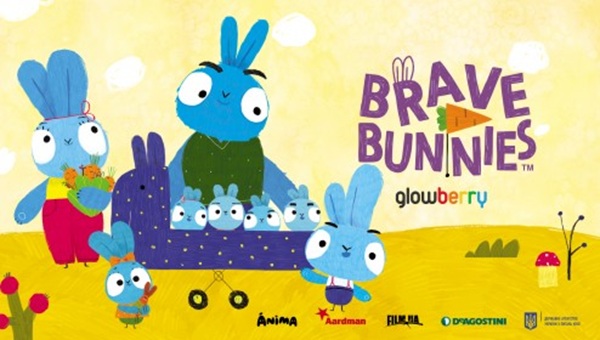
Heading the list of wholesome Ukrainian alternatives to Masha and the Bear, as recommended by LMN, was “Brave Bunnies — A Christian animated series for preschoolers that teaches tolerance and acceptance of diversity”. I’ll admit I haven’t watched Brave Bunnies myself. (Commitment to painstaking research has its limits.) However, given LMN’s endorsement, I rather doubt that the anthropomorphic characters whose “unique lifestyles” are presented in the show as deserving of understanding and respect include any who are ethnic Russians, or speak Russian as their native language.
A news report on the TV channel Kanal 5 (“Dangerous cartoons! How does Masha and the Bear foster aggression and promote Russian propaganda?”) came up with further reasons for a ban. “In 2012 child psychologists called Masha and the Bear a classic example of sadomasochism”, viewers were told, “because of the sometimes cruel behaviour of the main character.” The fact that Masha is never punished for her disruptive activities was held to be highly significant. Expert insight was provided by one Oksana Moroz, who makes a living selling advice on “information hygeine”. She explained that the “key propaganda goal” of the cartoon is to “shape behaviour that is beneficial to Moscow itself”. The aim presumably being to undermine national cohesion by encouraging indiscipline among Ukrainian children.
When an opportunity to whip up Russophobia comes along, you can guarantee that a Ukrainian politician won’t be far behind. In this case it was Verkhovna Rada deputy Yaroslav Yurchyshyn, who appealed to various state agencies to take action against Masha and the Bear. Yurchyshyn is a co-founder of the liberal pro-European party Holos and also chair of the Verkhovna Rada’s Freedom of Speech Committee. In the Orwellian world of present-day Ukraine, of course, the terms “liberal” and “freedom of speech” have taken on a new, and indeed entirely opposite, meaning.
According to Yurchyshyn, the Russian Federation has entered the field of animation in order to “invade our children’s minds”. Regrettably, responsible adults have not taken the threat posed by Masha and the Bear seriously, and so the state must intervene: “Parents often do not pay attention to what their kids are watching on YouTube. We must cleanse this field of Russian content and encourage the creation of our own products. Because, as we can see, Russian propaganda enters absolutely everywhere it can.”
The Ministry of Culture and Strategic Communications sent a lengthy reply to Yurchyshyn on 29 October (English auto-translation here). The MCSC struggled to support the ridiculous claim that Masha and the Bear is a vehicle for Russian propaganda. However it did find evidence that Animaccord conducts business activity in the Russian Federation and pays tax to the “terrorist state”, part of which goes towards funding the invasion of Ukraine. The MCSC therefore came to the no less ridiculous conclusion that it was appropriate to impose “economic and other restrictive measures (sanctions) against entities associated with the YouTube channel ‘Masha and the Bear’ on the grounds of financing terrorism”.
The letter added that this could “form the basis for joint efforts with European partners in combating the spread of Russian content that finances the war in Ukraine”. So, if the MCSC had its way, it’s not just in Ukraine itself that children would be deprived of their favourite cartoon, but across the rest of Europe too. That might not be such a bright idea. European citizens whose governments justify the endless supply of money and arms to Kyiv on the basis that it is defending freedom and democracy would likely see a bit of a contradiction there.
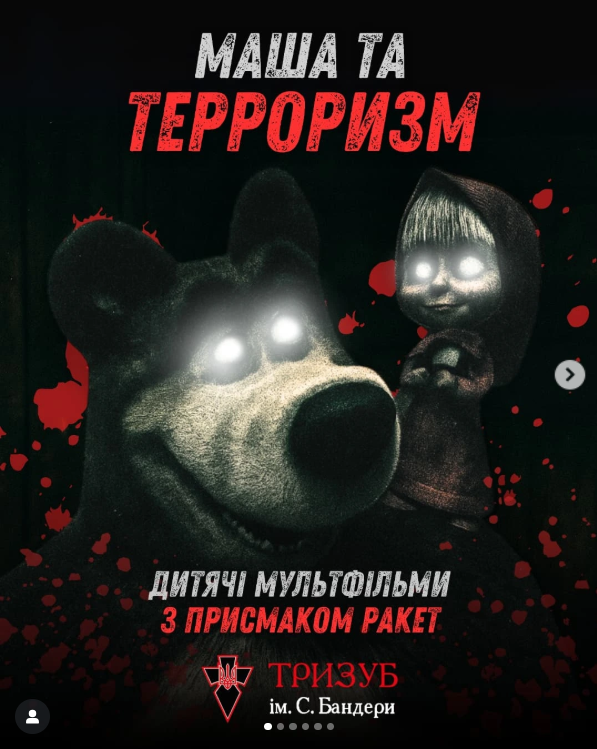
First published on Medium in November 2025