The Beatles and Love Me Do: Myths and realities
Considering the immense number of books and articles about the Beatles that have been published over the years, in which every corner of their collective biography has been thoroughly investigated, you might think there are no areas of the group’s history that still require clarification. But that isn’t necessarily the case. As anyone who frequents Facebook groups dedicated to the Beatles can confirm, the events surrounding the recording and release of their first single, Love Me Do, are still disputed.
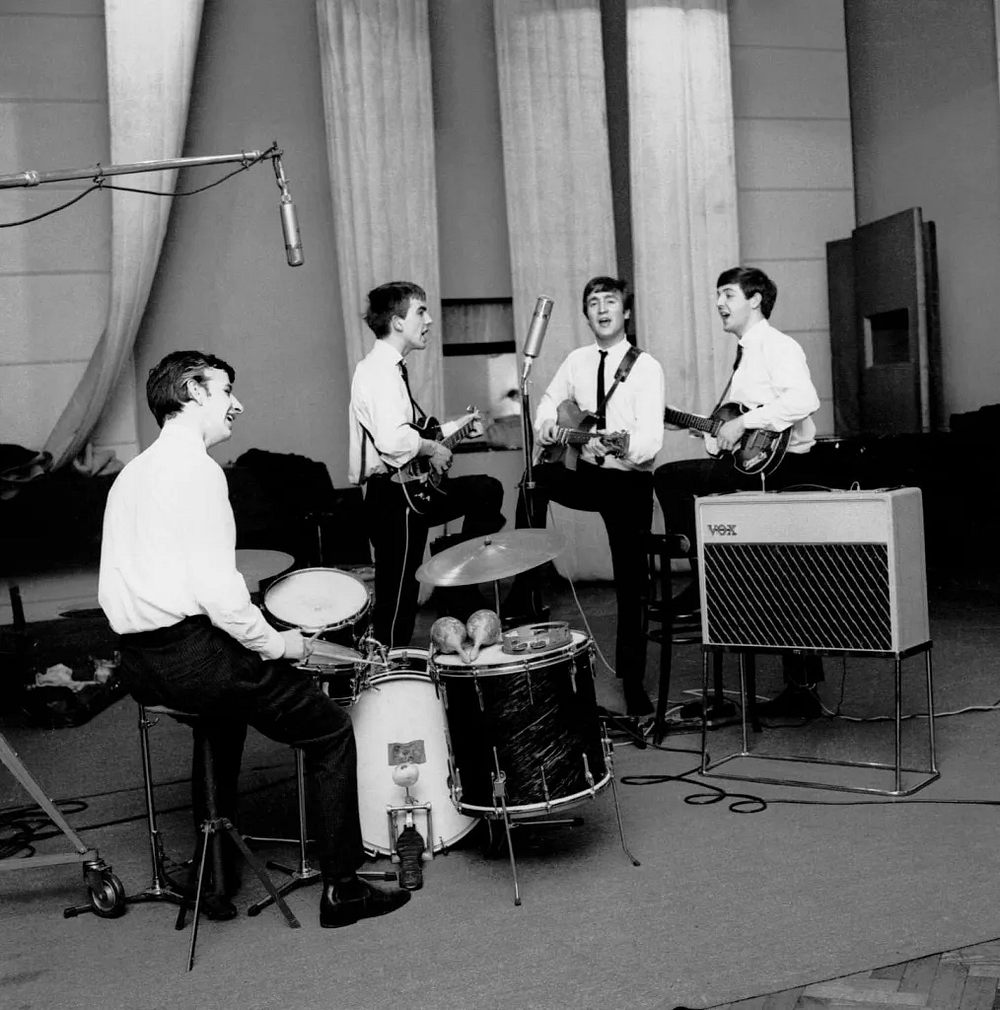
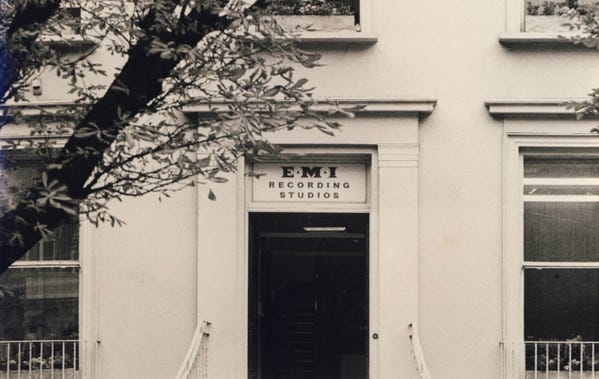
The story that was universally accepted for years, and is still widely believed, goes like this. The Beatles entered EMI Recording Studios at Abbey Road on 4 September 1962 to record the Lennon-McCartney composition Love Me Do for the EMI subsidiary Parlophone Records. But the head of Parlophone, George Martin, was so dissatisfied with Ringo Starr’s drumming on the date that he had the group come back a week later to re-record the song, with session musician Andy White on drums, and an understandably upset and resentful Ringo demoted to playing tambourine.
This story never really made sense. Both the Ringo and Andy White versions of Love Me Do are available for comparison, and it is certainly possible to favour one over the other. I prefer the Ringo version myself. Taken at a slightly slower tempo, which gives it a more relaxed feel, it also benefits from the intensive studio work put into it, which involved recording the instrumental track first and then overdubbing vocals and handclaps. To my ears the Andy White version from 11 September, which was recorded straight, without overdubs, is brisk and efficient but has less character. But the point is, you can’t imagine George Martin listening to a playback of the 4 September recording and being so displeased with Ringo’s performance that he made the Beatles return to Abbey Road, all the way from Liverpool, to do it again.
Another flaw in the story is that the version of Love Me Do that was actually released as a single in October 1962 was the Ringo recording. It has sometimes been argued that this must have been a mistake, and that the Andy White version was substituted on later pressings. “Ardent Beatles’ fans”, Mark Lewisohn wrote in his 1988 book The Complete Beatles Recording Sessions, “will be aware that the content of the single changed in 1963. Copies pressed before then featured the 4 September version of ‘Love Me Do’, Ringo on drums…. But later copies, and those available today, feature the Andy White version, from 11 September.”1 He pointed to the 1963 EP The Beatles’ Hits, which rather contradictorily included the Andy White version of Love Me Do that wasn’t on the hit single, as evidence of the swap.
Lewisohn was mistaken here. I have the original 1962 pressing of Love Me Do and also subsequent pressings from 1963 and 1964. All of them use the 4 September version with Ringo. The first time the Andy White version was released as a single in the UK was as part of a general reissue of Beatles’ 45s in 1976, and that was because the tape of the original single version with Ringo had been lost, destroyed or possibly recorded over. The Andy White recording was still available because that was the version used on the Beatles’ first album, Please Please Me, the master tape of which had been preserved.
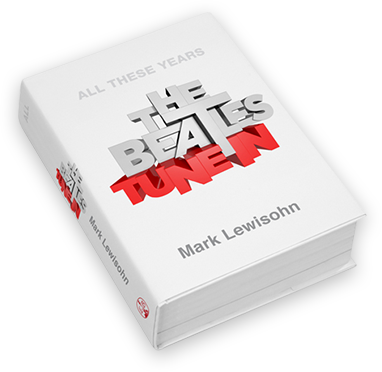
The most thorough and reliable account of the events leading up to the release of Love Me Do can be found in Mark Lewisohn’s definitive 2013 study The Beatles — All These Years, Volume 1: Tune In, which corrects the errors and omissions in earlier books, including his own Beatles Recording Sessions. Although it takes the Beatles’ story only up to the end of 1962, the extended edition of Tune In is a massive two-part work, and even the one-part abbreviated edition comes in at nearly a thousand pages. Which is probably more detail than any but the most obsessive Beatles enthusiast would want. Certainly, judging by discussions on social media, many fans appear not to have read it. So a more accessible analysis drawing on Lewisohn’s findings, which demolishes some of the still widely accepted myths about Love Me Do, is I think justifiable.
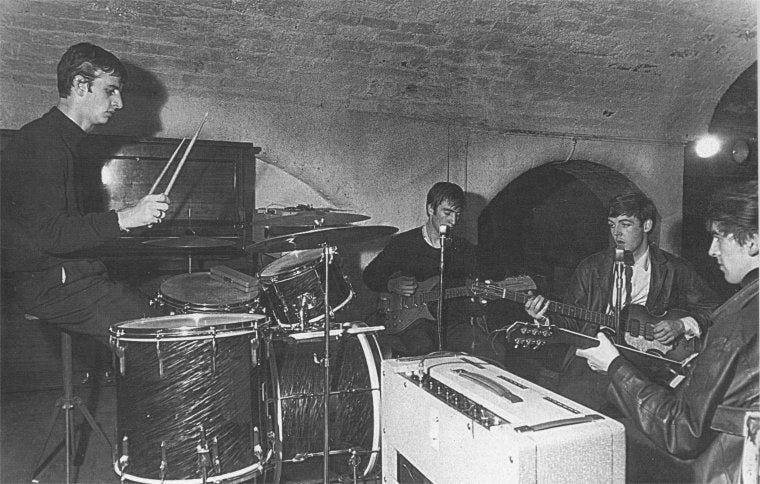
To analyse the course of events that resulted in the eventual release of Love Me Do in October 1962, we need to start with the first attempt to record the song, which took place at the Abbey Road studios on 6 June. Contrary to some accounts, Tune In states that the session was not an audition — the Beatles already had a contract — but an actual recording date intended to yield the group’s debut single.2 However, this aim turned out to be over-optimistic. George Martin was taken with the Beatles’ personal charisma, and thought they had the makings of a successful pop group on that basis, but decided that the results of their initial studio session were unreleasable. Martin had two grounds for dissatisfaction with the recordings.
One was the musical ability of the group’s then drummer Pete Best. On this first recorded version of Love Me Do, Best employed a syncopated “skip beat” in the middle eight, which he executed clumsily, resulting in unintended variations in tempo and making the performance sound amateurish. Martin concluded that Best was unsuitable for recording work and would in future have to be replaced by a more accomplished studio musician. Martin later insisted that he didn’t raise any objection to Best playing live gigs and had no intention of forcing him out of the group. Yet that is what happened. Beatles manager Brian Epstein called Best into his office on 16 August and informed him he was sacked, to be replaced by Ringo Starr, who had been recruited from another Liverpool group, Rory Storm and the Hurricanes. On 18 August, Ringo played in public as a member of the Beatles for the first time, at Hulme Hall in Port Sunlight, across the Mersey on the Wirral peninsula.
Martin also took a negative view of Lennon and McCartney’s abilities as composers. He liked the arrangement of Love Me Do with its distinctive harmonica, and intervened to improve the song by replacing Lennon with McCartney as the lead vocalist, in order to overcome the technical problem of Lennon singing the title line and then playing the harmonica immediately afterwards. (“Wait a minute, wait a minute, there’s a crossover there. Someone else has got to sing ‘Love Me Do’ because you can’t go ‘Love Me waahhh’. You’re going to have a song called ‘Love me waahh’!”)3 But Martin rated Love Me Do as no better than a B-side. Interviewed by Mark Lewisohn in 1995, he recalled: “I was looking for a hit song and didn’t think we had it in Love Me Do. I didn’t think the Beatles had any song of any worth — they gave me no evidence that they could write hit material.”4 This judgement was overly harsh, but Martin did have a point.
The Lennon-McCartney songwriting partnership had been formed years earlier, after their famous first meeting at the Woolton summer fete in July 1957, at which point they were both heavily influenced by Buddy Holly. As McCartney later recalled: “John and I started to write because of Buddy Holly. It was like, ‘Wow! He writes and is a musician’.”5 This was at a time when a division of labour between composers and performers was the norm. But when the Beatles emerged as a popular local group, between 1960 and 1961, it was in the context of a musical culture, later dubbed Merseybeat, that placed an emphasis on groups playing cover versions of recordings by US rhythm and blues artists, rather than writing and performing their own songs. Consequently there was little motive for Lennon and McCartney to hone their songwriting skills. It wasn’t until the Beatles attempted to score a recording contract that they realised they were unlikely to build a successful career as a covers band. Their problem was they had little in the way of new original material.
The three Lennon-McCartney compositions recorded in January 1962 at the Beatles’ failed audition with Decca — Hello Little Girl, Like Dreamers Do and Love of the Loved — were all old songs, from the 1957–9 period. Following Decca’s rejection of the group, Brian Epstein’s perseverance finally paid off in May when he secured a recording deal from Parlophone, and with a studio session looming Lennon and McCartney were under pressure to come up with some new self-penned songs, rather than rely on compositions from their earlier teenage years. Paul contributed P.S. I Love You, while Lennon wrote the Miracles-influenced Ask Me Why. They also reworked Love Me Do, which itself dated from 1958, by adding a middle eight and a bluesy harmonica accompaniment inspired by Bruce Channel’s hit Hey! Baby. These were the three Lennon-McCartney originals (along with the standard Besame Mucho) that were selected by George Martin’s deputy Ron Richards for recording at Abbey Road on 6 June.
As already noted, Martin didn’t think any of them was hit material. So he set about looking for a more commercially viable song for the Beatles’ first single. Ron Richards came up with How Do You Do It, the work of an aspiring young composer writing under the name Mitch Murray. It had been turned down by established pop star Adam Faith and also by Brian Poole and the Tremeloes (the group Decca had signed in place of the Beatles) but Martin was quite impressed. “I thought it was a good song”, he later recalled, “no great work of art but very commercial.6 This judgement turned out to be sound. In early 1963 the Beatles’ Merseyside rivals Gerry and the Pacemakers had a #1 hit with their Martin-produced recording of How Do You Do It?
In August Martin sent a demo of How Do You Do It to Brian Epstein, with instructions that the Beatles should learn and rehearse the song before returning to Abbey Road for their next recording session. The Beatles disliked the song intensely, even after they had adapted it to fit more closely with their own Merseybeat style, but unless they wanted to bring their recording career to a premature end they had no alternative but to comply with Martin’s orders.
At the 4 September session the Beatles laid down a competent if rather perfunctory version of How Do You Do It (eventually released in 1995 on the Anthology 1 compilation) before moving on to work on Love Me Do. Their lack of enthusiasm for Murray’s song is palpable. Having grudgingly got it committed to tape, they bravely decided to confront Martin and demand that they should be allowed record their own material instead. As McCartney later explained: “We knew that the peer pressure back in Liverpool would not allow us to do ‘How Do You Do It’. We knew we couldn’t hold our heads up with that sort of rock-a-pop-a-ballad. We would be spurned and cast away into the wilderness.”7 But Martin would have none of it. “If you write something as good as that song”, he told them, “I’ll let you record it, otherwise that’s the song that’s going out.”8
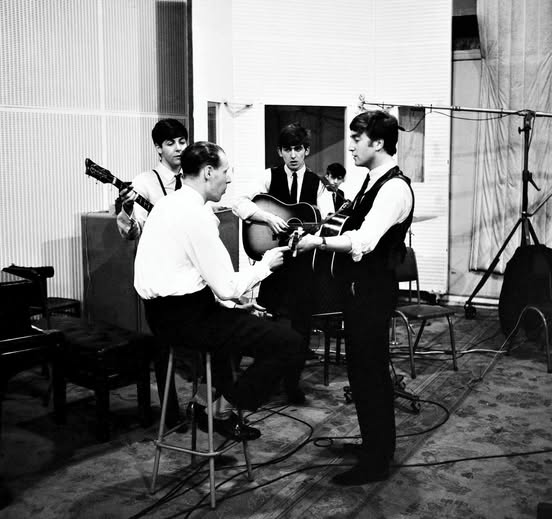
Martin was satisfied with the outcome of the 4 September session. As far as he was concerned, it had resulted in the successful completion of the Beatles’ first single, which he intended to be How Do You Do It, backed with Love Me Do. But this plan soon fell apart. The music publishers Ardmore & Beechwood, who had an agreement with Brian Epstein giving them an option on Lennon-McCartney compositions, insisted that Love Me Do should be the A-side. Because they were part of the same EMI operation as Parlophone, Martin was obliged to agree. Mitch Murray then refused to allow How Do You Do It to be released as a B-side. Not only did he disapprove of the Beatles’ rearrangement of his song but he also believed, not unreasonably, that it had hit potential, and he wasn’t prepared to have it relegated to the B-side of the first single by an obscure group from Liverpool that few outside that city had heard of.9
So Martin was left with Love Me Do as the A-side. That was the reason he had to get the Beatles to return to the studio on 11 September — not because he thought the quality of Ringo’s drumming at the 4 September session had made that version of the song unreleasable, but in order to record a B-side, which turned out to be McCartney’s P.S. I Love You. It has sometimes been argued that in doing this Martin had conceded to the Beatles’ demand that they should record their own original material. According to Kevin Ryan and Brian Kehew’s 2006 book Recording the Beatles: “George Martin had listened to the group’s complaints about ‘How Do You Do It?’ and wisely acquiesced, alllowing their first single to be comprised solely of self-penned songs.”10 However, as we have seen, that was not what happened.
While Martin had been content with the results of the 4 September session, he was unhappy about the time required to achieve them. Numerous takes of Love Me Do had proved necessary and the session overran, not finishing until late in the evening. Ringo’s drumming was apparently a factor here, because he was “nervous and terrified of the studio”, as he later recalled.11 This was why Martin hired Andy White to play drums when the Beatles returned to Abbey Road on 11 September.
The recording of P.S. I Love You was completed quite quickly at that session, and an early version of Please Please Me (released decades later on Anthology 1) was also taped. This was considered as a possible alternative to P.S. I Love You as the B-side, but it was decided that the song needed more work. As there was still studio time remaining, Ron Richards proposed that they should make another attempt at Love Me Do, to see if they could improve on the 4 September recording. Martin himself had no part in this. He was not present at the session, having evidently lost patience with the lengthy process of getting the Beatles’ first single recorded, so the decision to re-record Love Me Do was Richards’ alone.
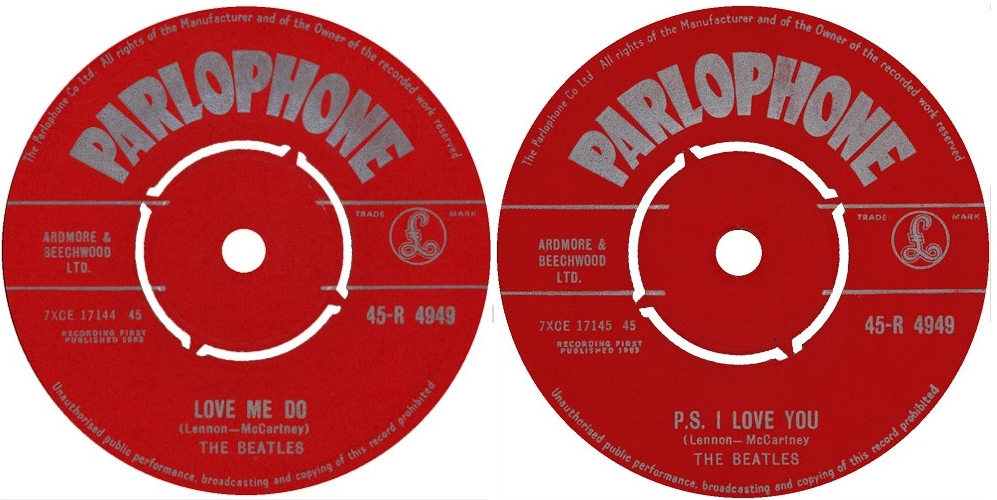
As previously mentioned, the version of Love Me Do that was released in the UK on the Parlophone label on 5 October 1962 was the Ringo version from 4 September, not the Andy White version. “It was the better of the two recordings”, Lewisohn comments, “but George Martin and Ron Richards could never remember if they selected it on purpose or in error.”12 Defying Martin’s pessimistic expectations, the single turned out to be a modest hit. Love Me Do entered the Record Retailer chart on 11 October and stayed there for four months, peaking at #17 on 27 December and again on 10 January. It continued to sell well, even after the release of the Beatles’ second single Please Please Me in January, remaining in the top 50 until 14 February.
We’re talking here about Record Retailer, which is now recognised as the canonical source for charts during the period from 1960 until early 1969 (at which point the BBC and Record Retailer jointly commissioned the British Market Research Bureau to compile an official chart). But that was a retrospective decision originating with the first edition of The Guinness Book of British Hit Singles in 1977. In the 1960s Record Retailer’s chart had no such pre-eminent status. This was a trade journal, not for sale to the general public, and it was the charts in the popular music papers New Musical Express and Melody Maker with their mass readership that had far more impact. So it’s worth examining the performance of Love Me Do on those charts.
The record entered the New Musical Express chart on at #27 on 25 October, much to McCartney’s excitement. As he later recalled: “I was on my own at home that morning, and when I looked at the NME and saw we were in at 27 I was delirious. ‘There it is! There we are!’ I was shaking. We’d been reading those charts for years — seeing hits come and go, up and down — and finally we had a little place on the ladder.”13 The same issue of the NME also featured a short article titled “Liverpool’s Beatles wrote their own hit”, in which readers were informed that “the boys have written more than 100 of their own songs” (an exaggerated claim obviously intended to boost Lennon-McCartney’s credibility as composers).14
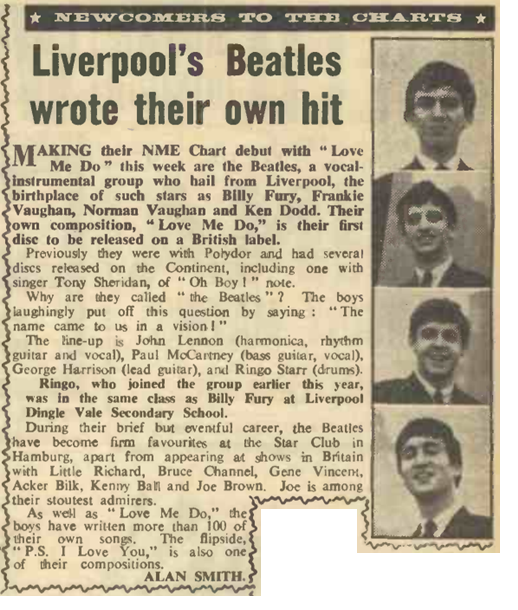
Unfortunately this turned out to be a false dawn as far as the NME chart was concerned. The following week Love Me Do dropped out of the NME top 30 (only Record Retailer and Melody Maker had a top 50 at this time), never to return. Love Me Do did much better with Melody Maker, where its extended run was comparable to that in Record Retailer, although it just failed to crack the top 20 on the Melody Maker chart. Having entered at #48 on 27 October, the record peaked at #21 on 5 and 12 January, only dropping off the chart after a final #43 placing on 16 February.
At the smaller-circulation Disc, which like the NME only published a top 30, the story was slightly different. Love Me Do entered that paper’s chart at #28 on 10 November and achieved its highest position at #24 on 8 December before its last appearance at #26 the following week. (Record Mirror, with a circulation comparable to Disc‘s, had stopped compiling its own chart earlier in 1962 and now used Record Retailer’s instead.)
The myth about Brian Epstein buying 10,000 copies of Love Me Do in order to “fix” the record’s chart placing also needs to be addressed here. It is based on a misunderstanding of how the charts were compiled. Even if Epstein had bought that many copies and claimed to have sold them all through the NEMS music shops that he managed, this would have had minimal impact on the national charts. The way it worked was that each week the music papers consulted their pool of record stores who provided them with information about singles sales. As Mark Lewisohn notes: “it made no difference how many copies a shop sold of any record because the charts weren’t computed that way. Nems had been a ‘chart return’ operation for years — it still provided data to Melody Maker and also now to Record Retailer — but those papers’ weekly phone calls or printed questionnaires didn’t ask for sales figures, only for a shop’s bestselling records ranked from 1 to 30; the papers awarded thirty points to the number 1 record down to one point for the number 30, and calculated an overall national total. All the charts were produced this way.”15
For a first single by a group based in a not-yet-fashionable northern city who were unknown to most of the record-buying public, the chart performance of Love Me Do in 1962–3 was an impressive achievement. By comparison with the Beatles’ increasingly sophisticated later output, Love Me Do may now sound rather crude and simplistic, but it served to put the Beatles on the map, raising their profile as a group who wrote their own material. Despite George Martin’s initial scepticism, their confident insistence on recording Lennon-McCartney compositions would soon pay off on a far larger scale.
Notes
1. Mark Lewisohn, The Complete Beatles Recording Sessions (1988), p.221.
2. Mark Lewisohn, The Beatles — All These Years, Volume 1: Tune In (2013) p.667 (Extended Special Edition, pp.1223–5)
3. Complete Beatles Recording Sessions, p.5
4. All These Years, Volume 1: Tune In, p.673 (Extended Special Edition, p.1232).
5. The Beatles Anthology (2000), p.22
6. All These Years, Volume 1: Tune In, p.698 (Extended Special Edition, p.1281)
7. Barry Miles, Paul McCartney: Many Years from Now (1997), p.83
8. All These Years, Volume 1: Tune In, p.728 (Extended Special Edition, p.1332)
9. For details of these negotiations, see All These Years, Volume 1: Tune In, pp.728-9 (Extended Special Edition, pp.1332-3).
10. Kevin Ryan and Brian Kehew, Recording the Beatles: The Studio Equipment and Techniques Used to Create Their Classic Albums (2006), p.350
11. Hunter Davies, The Beatles: The Authorised Biography (1968), p.169
12. All These Years, Volume 1: Tune In, p.732 (Extended Special Edition, p.1340)
13. All These Years, Volume 1: Tune In, p.782 (Extended Special Edition, p.1434)
14. McCartney appears to be the source of the “hundred songs” claim. See the 27 October 1962 interview with Radio Clatterbridge.
15. All These Years, Volume 1: Tune In, pp.751–2 (Extended Special Edition, p.1378)
First published on Medium in March 2026